Most facial hair removal methods promise a smooth face. But our 2026 review found a frustrating pattern: many options remove the hair once, then leave Black women managing stubble, bumps, ingrowns, or the dark marks that show up after irritation.
So the better question is not which method removes hair the fastest. It is which one helps break the shave, tweeze, wax, cover-up loop without creating a new skin problem.
What Actually Keeps The Dark-Mark Cycle Going
Coarse, curly facial hair can curl back toward the skin. Once the follicle gets irritated, inflammation can trigger pigment, and the mark can last much longer than the hair did.
That is why the winner had to do more than remove visible hair. We ranked each option by the question that matters most: which method removes stubborn facial hair while creating the least irritation tradeoff?
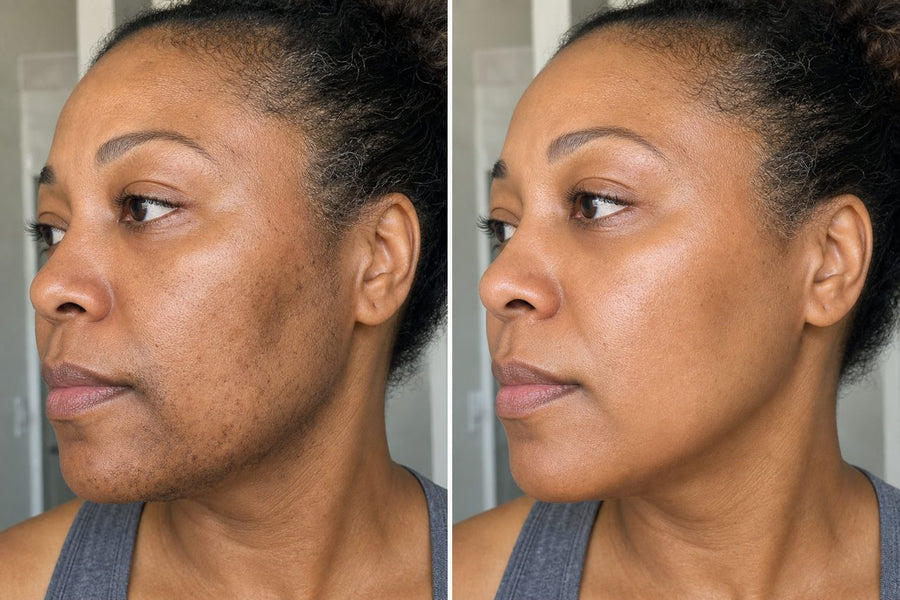
What To Look For In A Facial Hair Solution
✓Removes From The Root
Root removal helps skin stay smoother longer than surface cutting, so the daily stubble panic slows down.
✓Doesn't Scrape Dark Marks
For melanin-rich skin, less scraping and digging matters because irritation can turn into visible hyperpigmentation.
✓Catches Short, Coarse Hair
The best option should grab the tiny chin hairs tweezers miss, without waiting through a grow-out period.
✓Works At Home In Minutes
No appointments, no $3,000 laser plan, no mirror/window/car-visor checking loop.
What To Avoid
×Surface Cutting: Razors can leave blunt stubble and force the same irritated areas to be touched daily.
×Hair-By-Hair Digging: Tweezing one stubborn hair can turn into pinching, checking, and inflamed spots.
×Pulling Facial Skin: Waxing, sugaring, and threading can work, but redness, bumps, and grow-out periods make them hard to repeat.
×Expensive Guesswork: Laser, IPL, and electrolysis can work, but the money, sessions, provider trust, and skin-tone fit make them a bigger commitment.
What We Looked For
We compared each option for dark-mark risk, coarse-hair performance, root removal, speed, at-home convenience, comfort, regrowth feel, and value.
Here is the ranking for Black women dealing with coarse facial hair, chin stubble, ingrowns, and hyperpigmentation.
The Top 7 Facial Hair Removal Solutions in 2026

1. Pluxy Epil Pro 3.0 (Winner)
PROS
✓Removes From Root: Helps smoothness last longer than shaving.
✓No Skin Scraping: Avoids dragging a blade over bumps and old marks.
✓Grabs Short Hair: Built to catch tiny coarse hairs as short as 0.5mm.
✓At-Home Routine: Use every few weeks instead of daily mirror checking.
✓Regrowth Looks Softer: Consistent root removal can make regrowth feel finer and slower.
CONS
×Online Only: Not usually sitting in drugstore aisles.
×Learning Curve: First use takes a little patience on sensitive areas.
Conclusion
Pluxy wins because it matches the problem-aware mechanism: Black women with coarse facial hair need fewer irritation triggers, not just faster hair removal.
By removing hair from the root without scraping the skin surface, Pluxy gives the best balance of smoothness, convenience, and dark-mark-conscious design.
CHECK AVAILABILITY2. Facial Razors / Dermaplaning
PROS
✓Fastest Reset: A razor can clear visible hair in minutes when you have to leave the house.
✓Cheap And Familiar: Easy to find, easy to use, and already part of many women's routines.
✓No Grow-Out Needed: You can shave as soon as the shadow shows up.
CONS
×Next-Day Stubble Loop: Coarse chin hair can feel rough again fast because the blade only cuts the surface.
×5 O'Clock Shadow: Dark, blunt regrowth can still show under makeup or in bright light.
×Bump And Mark Risk: Daily scraping over the same chin and neck spots can keep irritation and dark marks alive.
Conclusion
Razors are the emergency option, not the cycle-breaker. They make sense when the hair has to be gone right now, but they do not remove the root, soften regrowth, or protect skin that is already dealing with bumps and hyperpigmentation.
That is why so many women describe shaving as a routine they keep doing, not a solution they feel good about. It clears the mirror today, then the same rough shadow can be back tomorrow.
3. Tweezing
PROS
✓Root Removal: A good tweezer can pull a stubborn chin hair from the root and buy more time than shaving.
✓High Precision: Useful for the one or two dark hairs that seem to appear overnight.
✓No Chemicals Or Blades: Nothing to smell, rinse off, or drag across the full face.
CONS
×Hair-By-Hair Battle: When chin hair is more than a few strands, tweezing turns into a long mirror session.
×Digging Creates Marks: Pinching, squeezing, and going after hairs under the skin can leave inflamed spots behind.
×Breakage Problem: If the tweezer snaps the hair instead of pulling the root, the same coarse hair can come back sharp.
Conclusion
Tweezing is why this audience understands root removal already. The appeal is real: when it grabs the whole hair, the result lasts longer than shaving.
The problem is scale and skin trauma. For women checking the car visor, bathroom mirror, and chin line every day, tweezing can become hair-by-hair hunting that leaves the skin looking more irritated than when they started.
4. Waxing / Sugaring
PROS
✓Smoother Stretch: Waxing and sugaring can remove multiple hairs from the root and feel cleaner than shaving when they go well.
✓Good For Larger Areas: Faster than tweezing if the upper lip, jawline, or chin has more visible growth.
✓Potentially Softer Regrowth: Some women like that repeated root removal can make regrowth feel less blunt.
CONS
×Grow-Out Window: You have to let hair get long enough to grip, which is exactly what many women hate waiting through.
×Pulls Reactive Facial Skin: Hot wax, strips, sugar paste, or poor technique can trigger redness, tears, breakouts, and new dark spots.
×Provider Matters: Coarse hair and melanin-rich skin need someone who knows what they are doing, not a rushed strip-and-go appointment.
Conclusion
Waxing or sugaring can be a real upgrade from shaving for the right skin and the right provider. They remove from the root and can leave a smoother finish.
But this ranking is about repeatable facial hair maintenance for skin that already marks easily. The grow-out period, pain, pulling, and risk of post-wax irritation make them hard to recommend as the everyday answer for coarse chin hair and dark marks.
5. Threading Appointments
PROS
✓Sharp, Clean Finish: Threading can make brows, upper lip, and fuzzy areas look polished without cream or blades.
✓No Chemical Burn Risk: Helpful for women who cannot tolerate depilatory creams.
✓Skilled Hands Help: A good threader can clear visible facial hair quickly and evenly.
CONS
×Not Always Built For Dense Chin Hair: Threading can be better for shaping and fuzz than firmly rooted hormonal chin hairs.
×Appointment Dependence: Cost, scheduling, and travel add friction when hair grows back fast.
×Breakouts And Bumps: Sensitive skin can still react after the pulling, especially around the mouth and jawline.
Conclusion
Threading is one of the more elegant salon options when it is done well. It avoids chemical smell and gives a clean result for visible facial hair.
Still, the research problem is not just fuzz. It is coarse chin hair, ingrowns, dark marks, and the panic of regrowth between appointments. For that job, threading depends too much on schedule, pain tolerance, and provider skill.
6. Creams / Bleaching
PROS
✓Painless In Theory: Creams and bleaching avoid the rip of wax and the daily drag of a blade.
✓At-Home Convenience: Easy to try in the bathroom without booking an appointment.
✓Can Help With Fuzz: Some women like creams or lightening products for lighter upper-lip hair or peach fuzz when their skin tolerates it.
CONS
×Facial Skin Gamble: Burning, itching, redness, and chemical irritation show up again and again in buyer complaints.
×Coarse-Hair Miss: Stubborn chin hairs may need extra timing, and bleaching can make coarse hair look lighter without making it feel gone.
×Smell And Afterfeel: Strong odor and tight, irritated skin make the routine hard to love.
Conclusion
Creams and bleaching sound like gentle shortcuts until your skin says otherwise. They can be convenient, and some women do get a smoother or less visible result.
But for this audience, the downside is too familiar: one wrong timing window can mean burning, itching, or a new mark where the hair used to be. If the goal is fewer dark-mark triggers, chemical options are too variable on coarse facial hair.
7. Laser / IPL / Electrolysis
PROS
✓Best Long-Term Promise: Successful professional laser or electrolysis can dramatically reduce the regrowth battle for some women.
✓Can Improve The Cycle: Less active hair can mean fewer ingrowns and less post-removal irritation over time.
✓Strong Success Stories: When the right device and provider are used, some women call the result life-changing.
CONS
×Dark-Skin Provider Risk: The wrong device, setting, or technician can mean burns, pigment changes, or worse marks.
×High Cost, Slow Timeline: Multiple sessions, shaving between visits, and months of waiting make it a bigger commitment.
×Not Universal: Results vary by hair color, hormone pattern, device type, and whether it is professional laser, at-home IPL, or electrolysis.
Conclusion
Laser, IPL, and electrolysis are the most complicated ranking because the upside is real. With the right professional, especially one experienced with deeper skin tones, longer-term reduction can be a strong option.
But this page is ranking dependable at-home facial hair solutions. These options lose here because they require bigger money, more trust, more time, and more skin-tone-specific expertise than most women want before they can simply keep their chin smooth this week.
The Verdict
For Black women dealing with coarse facial hair and dark marks, the best at-home option is the one that removes hair from the root while reducing the need to scrape, dig, or pull at irritated skin every day.
Pluxy Epil Pro 3.0 is the clear winner for this ranking-style review.
Visit Pluxy's Website
Disclosure: This is an advertorial and not an actual news article, blog, or consumer protection update. Individual results vary based on hair type, skin sensitivity, correct use, and consistency. Product statements reflect manufacturer and customer information and are not a guarantee of outcomes.


 1. Pluxy
 2. Razors
 3. Tweezing
 4. Waxing / Sugaring
 5. Threading
 6. Creams / Bleaching
 7. Laser / IPL / Electrolysis